Today, the Senate voted in an 87-10 margin to increase the minimum wage. Although, the vote was barred from debate for 30 hours and has the possibility of being held up another 30 hours if Senate Republicans want to continue discussion over the issue. This version of the bill is different from the one originally sent to the Senate floor from the House of Representatives. The original was voted down due to the fact that there was not enough protection for small businesses. The new bill includes an 8 billion dollar tax break and "regulatory concessions" for the protection of these above mentioned businesses.
The bill only has two more steps until it becomes law, and one of those is going back to the House for approval of changes, the other being that it needs to be signed by the President, who has publicly supported a minimum wage increase, so long as small business is catered to. However, Charles Rangel (D-NY), chairman of the House Ways and Means Committee, does not support this bill coming from the Senate mainly because of the fact that tax and money issues are supposed to be decided in the House, per the Constitution.
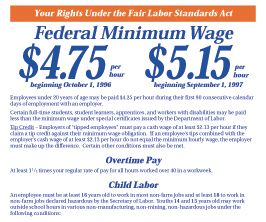
On a side note, the minimum wage has not been raised since 1997, one year before President Clinton was to be impeached, 3 years before Y2K, and 4 years before the September 11th terrorist attacks.
Regardless of what happens, the Democrats need to maintain unity, even between the House and the Senate, if they want to uphold and further their own power. If they come to in-fighting, they will most likely face the same fate as the Republican-led Congress that was deposed in the 2006 Midterms.

